
Germany vs Canada for Indian Students
admin
May 13, 2026
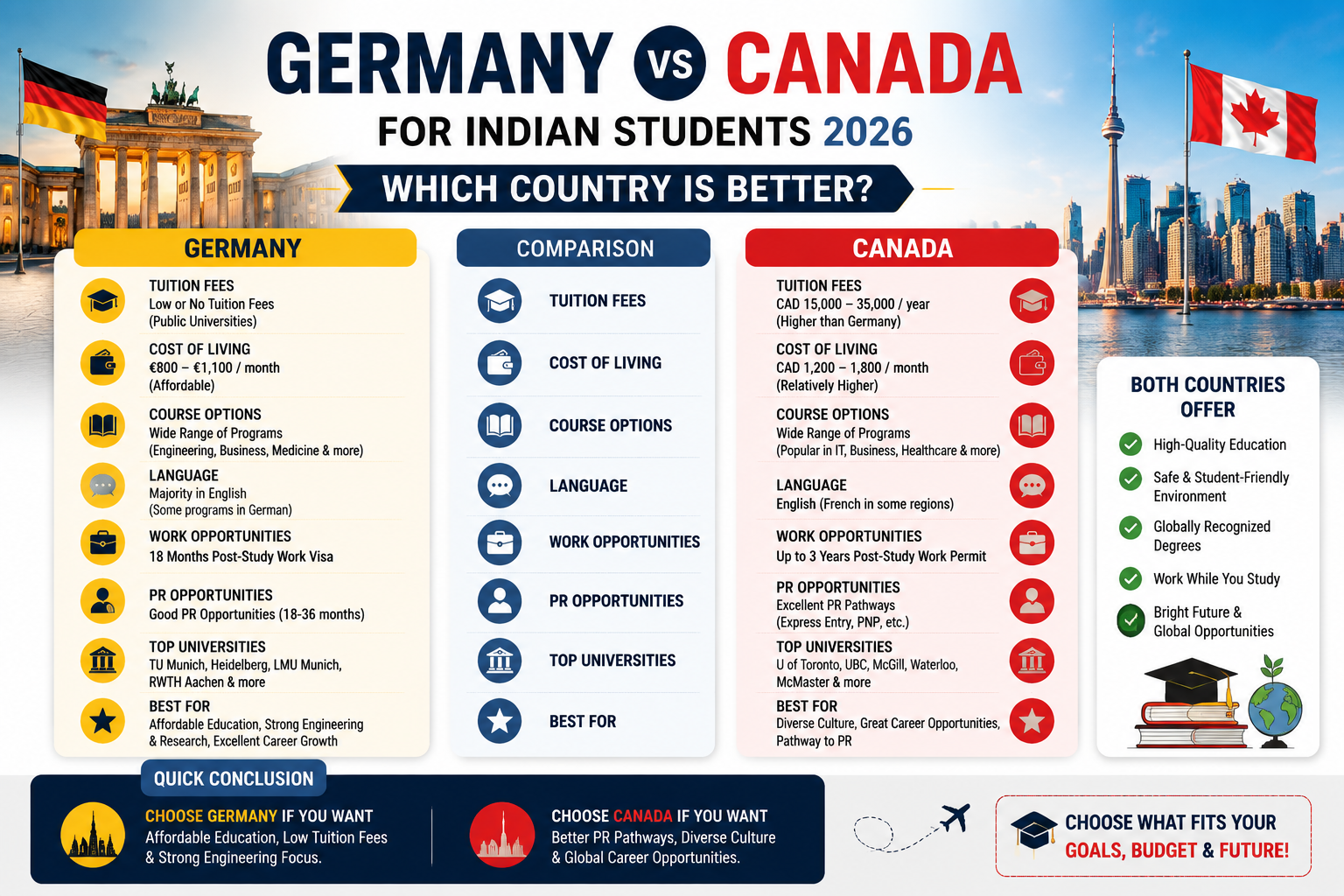
Germany vs Canada for Indian Students: Which Is Better in 2026?
Studying abroad is one of the most important decisions in a student’s life, and choosing the right country can have a significant impact on your academic and professional future. In 2026, Germany and Canada continue to be the top destinations for Indian students seeking quality education, global exposure, and strong career opportunities. Both countries offer a wide range of programs, modern infrastructure, and pathways to work and permanent residency. However, each comes with its unique advantages and challenges.
In this comprehensive guide, we’ll compare Germany and Canada across multiple key factors — tuition fees, cost of living, education quality, courses, job opportunities, part-time work, immigration, language, culture, lifestyle, and more. By the end, you’ll have a clear understanding of which destination aligns with your academic goals, budget, and long-term career plans.
Quick Comparison: Germany vs Canada
| Factor | Germany | Canada |
|---|---|---|
| Tuition Fees | Low or Free (Public Universities) | High |
| Living Costs | Moderate | High |
| PR Opportunities | Moderate | Excellent |
| Part-Time Work | Allowed (120 full days / 240 half days) | Allowed (varies by program) |
| Popular Courses | Engineering, Technology, AI, Robotics | Business, Healthcare, IT, Hospitality |
| Language | English + German (some courses) | English (primary) |
| Job Market | Strong in Technical Fields | Broad across industries |
| ROI | High for Technical Students | Good but expensive |
While both countries offer high-quality education and international exposure, your choice should depend on your career goals, preferred courses, budget, lifestyle, and long-term vision.
1. Tuition Fees: Germany vs Canada
Germany Tuition Fees
One of the biggest advantages of studying in Germany is affordable education. Public universities in Germany often charge no tuition fees or very nominal semester contributions (€150–€350 per semester). Private universities are more expensive, ranging between €10,000–€20,000 per year, but still comparatively cheaper than Canada.
Additional costs include:
- Semester contributions
- Health insurance
- Basic administrative fees
This makes Germany highly attractive for students looking for a budget-friendly education with high ROI.
Canada Tuition Fees
Canada offers excellent education but at a higher cost. Tuition varies depending on the program and institution:
- Undergraduate Programs: CAD 15,000–35,000 per year
- Master’s Programs: CAD 18,000–40,000 per year
- Professional programs (e.g., MBA, Medicine): Can exceed CAD 50,000 per year
Winner for Affordability: Germany
Germany clearly offers a lower-cost education and better return on investment for students who are cost-conscious yet want high-quality programs.
2. Cost of Living
Germany
Average monthly living expenses in Germany range between €850–€1,200. Costs include accommodation, food, transportation, health insurance, and utilities. Cities like Munich are more expensive, whereas smaller cities like Leipzig or Aachen are more affordable.
Canada
The cost of living in Canada is higher, with average monthly expenses between CAD 1,200–2,500. Major cities like Toronto and Vancouver can be particularly expensive, making budgeting crucial for international students.
Winner for Living Costs: Germany
Overall, Germany offers a more affordable lifestyle for students without compromising on quality of life.
3. Quality of Education and Top Universities
Both Germany and Canada boast world-class universities recognized globally.
Top Universities in Germany
- Technical University of Munich – Renowned for engineering and technology
- RWTH Aachen University – Strong in mechanical and industrial engineering
- Heidelberg University – Leading in research-driven learning
Germany is particularly strong in technical education, research, and engineering programs.
Top Universities in Canada
- University of Toronto – Comprehensive programs in multiple disciplines
- McGill University – Excellent for business and healthcare studies
- University of British Columbia – Strong research and innovation focus
Canada is preferred for business, healthcare, and multidisciplinary research programs.
Winner: Tie
Both countries offer high-quality education, but the better choice depends on your field of study.
4. Popular Courses and Career Alignment
Choosing the right course and country combination is critical for career success.
Best Courses in Germany
- Mechanical Engineering
- Automotive Engineering
- Artificial Intelligence
- Robotics
- Computer Science
- Renewable Energy
Best Courses in Canada
- Business Management
- Healthcare
- Hospitality
- IT and Software
- Media & Communications
Recommendation
- Choose Germany if your focus is engineering, technical fields, AI, or research-driven careers.
- Choose Canada if your goal is business, healthcare, or immigration-friendly career pathways.
5. Job Opportunities After Graduation
Career prospects are a key factor in choosing a study destination.
Germany Job Market
- High demand for engineers, IT specialists, AI professionals, and healthcare workers
- Skilled labor shortage in technical sectors
- Average graduate salaries: €55,000–€85,000 for engineers; €60,000–€100,000 for IT & AI roles
Canada Job Market
- Opportunities across business, IT, healthcare, finance, and hospitality
- Strong startup ecosystem
- Average graduate salaries: CAD 55,000–110,000 depending on industry
Winner: Both Strong, Different Strengths
Germany is ideal for engineering and technical careers, while Canada offers broader industry opportunities.
6. Part-Time Work Opportunities
International students often rely on part-time jobs for experience and income.
Germany
- 120 full days or 240 half days per year
- Average pay: €12–€20/hour
Canada
- Students can work according to visa guidelines, usually up to 20 hours per week during term
- Average pay: CAD 15–25/hour
Winner: Canada Slightly Better
Canada offers slightly higher wages, but remember the higher living costs offset part-time earnings.
7. PR and Immigration Opportunities
Long-term career planning often depends on residency options.
Germany
- EU Blue Card pathways
- Skilled worker opportunities
- 18-month post-graduation stay to search for jobs
Canada
- Post-Graduation Work Permit (PGWP)
- Express Entry
- Provincial Nominee Programs (PNPs)
Winner: Canada
Canada has more structured and simpler immigration pathways, making it attractive for students aiming for permanent residency.
8. Language and Cultural Adaptation
Germany
- Many programs in English, but learning German is beneficial
- Improves employability, networking, and day-to-day life
Canada
- English-speaking environment
- Easier cultural adaptation for Indian students
Winner: Canada
Canada provides a smoother transition, especially for students who are not familiar with European languages.
9. Safety, Lifestyle, and Student Experience
Both Germany and Canada are considered safe, student-friendly destinations.
Germany
- Rich European culture
- Affordable travel within Europe
- Efficient public transportation
Canada
- Multicultural environment
- Supportive student communities
- High standard of living
Both countries offer excellent student lifestyle, but Canada may be more welcoming for first-time international students.
10. How to Decide: Germany or Canada?
Your decision depends on personal priorities:
Choose Germany if you want:
- Affordable education with low tuition fees
- Strong engineering and technical programs
- High ROI on education
- European exposure and career opportunities
Choose Canada if you want:
- Easier PR and immigration pathways
- English-speaking environment
- Broader career options across industries
- Flexible work opportunities
- Multicultural, student-friendly society
11. How Hurray Overseas Supports Students
Making an informed choice can be challenging. Hurray Overseas helps Indian students plan their study abroad journey in 2026 by offering:
Personalized Career Counseling
- Budget planning
- Academic and career guidance
- PR pathway analysis
- Lifestyle and city preferences
University and Course Selection
- Shortlisting universities
- Course selection
- SOP and LOR guidance
- APS certificate support (Germany)
- Admission documentation and resume building
Visa and Financial Assistance
- Visa application support
- Blocked account setup
- Education loans and scholarships
- Financial planning guidance
Language and Pre-Departure Support
- IELTS preparation
- German language basics
- Interview preparation
- Pre-departure orientation
- Accommodation and travel planning
- Health insurance guidance
Hurray Overseas ensures that students are fully prepared for admission and life abroad, reducing stress and increasing success rates.
Final Thoughts
Both Germany and Canada offer unique advantages for Indian students in 2026. There is no universally “better” destination — it all comes down to your career goals, finances, preferred courses, and long-term plans. By making a strategic, informed choice rather than following trends, you can maximize your academic success and future career growth.
Plan your study abroad journey with Hurray Overseas and gain access to personalized counseling, university admissions, visa support, financial guidance, and pre-departure assistance. With the right guidance, you can confidently choose between Germany and Canada and take the first step toward a successful international career.