
New Immigration Rules in Australia
admin
April 15, 2026
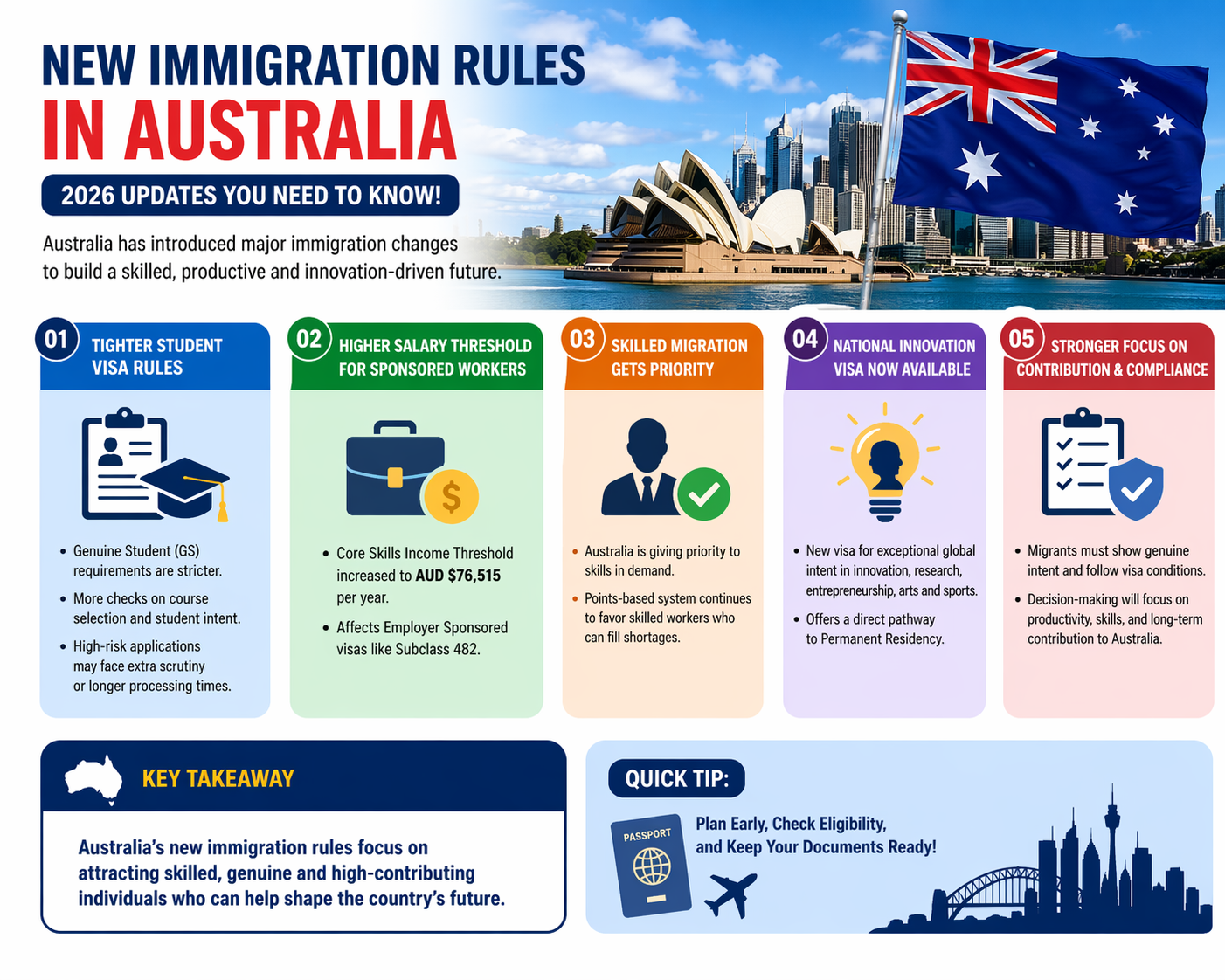
New Immigration Rules Australia have become one of the most searched topics among students, skilled workers, and families planning to move abroad. Australia has introduced important immigration changes in 2026, and these updates affect student visas, work permits, post-study visas, and skilled migration pathways. If you are planning to study, work, or settle in Australia, understanding these new rules is very important for making the right decision. Australia remains one of the most attractive destinations for international students, skilled professionals, and families looking for better opportunities. But in the last two years, the Australian government has introduced several major immigration reforms. These changes are designed to make the migration system more selective, more transparent, and more focused on genuine students and skilled workers.
If you are planning to study, work, or settle in Australia, understanding the new immigration rules in Australia is now more important than ever. Many applicants still rely on outdated information, and that can lead to delays, refusals, or poor planning. In 2026, the rules around student visas, Temporary Graduate visas, skilled migration, and salary thresholds are all stricter or more structured than before.
This guide explains the latest rules in a simple way so that students, job seekers, employers, and migration-focused readers can understand what has changed and how to prepare.
Why Australia Changed Its Immigration Rules
Australia’s recent immigration reforms are part of a broader Migration Strategy released by the government to improve the quality and integrity of the migration system. The government has said the aim is to reduce misuse, make sure student visas are used for genuine study, attract workers with needed skills, and create a fairer path for migrants who contribute to the economy.
In other words, Australia is not shutting its doors. It is becoming more selective. The country still needs skilled workers, still welcomes international students, and still runs a large permanent migration program. But now, applicants need to be better prepared and meet clearer requirements. The 2025–26 permanent Migration Program remains set at 185,000 places, with 132,200 places in the Skill stream and 52,500 in the Family stream, showing that skilled migration remains a major priority.
New Student Visa Rules in Australia
One of the biggest areas of change is the student visa system. Australia has tightened student visa settings to make sure the visa is being used by genuine students, not by people trying to stay in the country for other reasons.
1. Genuine Student Requirement Replaced GTE
A major change was the replacement of the old Genuine Temporary Entrant (GTE) test with the Genuine Student (GS) requirement for student visa applications lodged on or after 23 March 2024. Under the GS test, applicants must show that studying is the main reason for coming to Australia.
This change matters because the government now wants stronger evidence that a student has a real education goal. Applicants need to show how the course fits their academic background, future career plans, and personal circumstances. This means weak statements, copied SOPs, or unclear study plans can create risk.
2. Higher English Language Requirements
Australia also increased the English language requirements for student visas. The minimum IELTS score for a Student visa rose from 5.5 to 6.0, and for students taking ELICOS before their main course, the minimum score increased from 4.5 to 5.0.
This change shows that Australia wants students to be better prepared for study and life in the country. For applicants, this means English test preparation is no longer a small step. It is now one of the most important parts of the visa process.
3. Higher Financial Capacity Requirement
From 10 May 2024, Australia increased the financial capacity requirement for student visa applicants. For the primary applicant, the amount increased from AUD 24,505 to AUD 29,710.
This is a big shift because it affects budgeting, bank statements, and financial proof. Students now need to show stronger financial readiness before applying. Families supporting the applicant also need to plan documentation more carefully.
4. Onshore Applicants Need a Confirmation of Enrolment
From 1 January 2025, Australia stopped accepting a simple Letter of Offer for people applying for a Student visa from inside Australia. Onshore applicants now need a Confirmation of Enrolment (CoE).
This rule reduces flexibility for last-minute or incomplete applications. It means students already in Australia must make sure their admission and enrolment are fully confirmed before lodging a new student visa.
5. Student Visa Charges Increased
Australia also increased the student visa application charge. The government announced that from 1 July 2024, the fee for international student visas increased from AUD 710 to AUD 1,600. The current Student visa page now lists the visa cost as from AUD 2,000, which shows applicants should always check the latest pricing before applying.
This fee rise is significant. It makes failed or poorly prepared applications much more expensive than before.
New Temporary Graduate Visa Rules
The Temporary Graduate visa (Subclass 485) has also seen major changes. This visa has long been important for international students who want work rights after completing Australian study. But the rules are now tighter.
1. Age Limit Reduced
One of the most discussed changes is the reduced age limit. For many applicants, the maximum eligible age is now 35 years or under at the time of application, with limited exceptions.
This change has had a direct impact on older international students who were previously using Australian study as a pathway to stay longer and gain local work experience.
2. Higher English Requirement for Graduate Visa
The English requirement for the Temporary Graduate visa also increased. The minimum IELTS score rose from 6.0 to 6.5, with a minimum of 5.5 in each component.
This means that graduates now need stronger English ability to access post-study work rights. For many applicants, especially those planning this pathway in advance, it is important to start English preparation earlier.
3. Stream Realignment and Shorter Post-Study Settings
The Temporary Graduate visa program was restructured from 1 July 2024, with changes to stream names and post-study settings. These reforms were part of the government’s wider plan to tighten post-study migration settings and reduce misuse of temporary pathways.
For students, the message is clear: post-study work in Australia is still possible, but the path is now narrower and more controlled.
Skills in Demand Visa: A Major Shift for Skilled Workers
Australia introduced the Skills in Demand visa (Subclass 482) as a key part of its skilled migration reform. This visa is designed to help employers sponsor overseas workers when they cannot find suitable Australians for the role.
This new setup matters because Australia is trying to better match visa policy with real labour shortages. Instead of treating all sponsored roles the same way, the system is becoming more targeted.
The Skills in Demand visa includes streams such as the Core Skills stream and Specialist Skills stream, and the rules are linked more closely to salary levels and occupation needs.
For skilled migrants, this is one of the biggest immigration changes in Australia because salary, job role, and employer sponsorship quality now matter even more than before.
Skilled Visa Salary Thresholds Increased
Another important rule change is the rise in skilled visa income thresholds. Australia announced that from 1 July 2025, skilled visa income thresholds would increase by 4.6% in line with average weekly earnings.
According to the official salary requirements page, for nomination applications lodged from 1 July 2025 to 30 June 2026, the Specialist Skills Income Threshold is AUD 141,210, while the page also reflects updated threshold settings used across sponsored skilled migration categories.
This change is especially important for employers and applicants because even if a person has the right skills, the salary offered must still meet the required threshold. A job offer that falls below the required level may not support the visa pathway.
Australia Still Favors Skilled Migration
Despite stricter rules, Australia continues to prioritize skilled migration. The 2025–26 migration planning levels confirm that the Skill stream remains the largest part of the permanent migration program.
This means that skilled professionals in healthcare, engineering, construction, IT, education, trades, and other needed sectors still have good opportunities. The difference now is that applicants must be genuine, properly qualified, and aligned with the country’s workforce needs.
The skilled occupation list also remains an important reference point because it shows which occupations Australia currently needs. As this list can change, applicants should always check the latest occupation settings before investing in assessments or applications.
What These New Australia Immigration Rules Mean for Students
For international students, the new rules create a more serious and more expensive process. Students now need stronger English, stronger financial evidence, a more convincing study plan, and more careful document preparation.
The days when some applicants could treat a student visa as an easier entry route are fading. Australia now wants students who can clearly explain why they chose the course, why they chose Australia, and how the course fits their future.
That does not mean genuine students should be discouraged. It simply means preparation matters more. A student with a clear academic profile, proper funds, valid English scores, and a genuine plan can still be a strong applicant.
What These Rules Mean for Skilled Workers
For skilled workers, Australia still offers strong opportunity, especially through employer-sponsored pathways and permanent skilled migration. But the bar is higher in practical terms. Salaries must meet thresholds, occupations must match demand, and employers must be credible sponsors.
This can actually benefit serious applicants. A more structured system often reduces competition from weaker or less suitable cases. Skilled professionals who have recognized qualifications, relevant experience, good English, and a real job pathway may stand out more clearly in the new system.
What Families Should Know
Although the recent headlines focus more on students and skilled migrants, the Family stream remains a major part of Australia’s migration program, with 52,500 places in the 2025–26 permanent program.
For family-based applicants, the larger lesson is that Australia is trying to run a more controlled migration system overall. That means applicants should expect close document checks, updated fees, and formal process requirements. Anyone planning a family visa should use the most current guidance and avoid relying on old checklists.
Common Mistakes Applicants Should Avoid
Many applicants fail not because they are ineligible, but because they make avoidable mistakes. One common error is using outdated immigration advice. Another is submitting weak financial or English evidence. Some students also write generic SOPs that do not explain their course choice properly. Skilled workers sometimes overlook salary thresholds or assume an employer offer automatically guarantees a visa.
The safest approach is to treat every Australian visa application like a serious legal and financial process. Check the latest rules, read official pages, prepare your documents carefully, and make sure your application matches the current policy environment.
Final Thoughts
The new immigration rules in Australia show that the country is not closing migration. Instead, it is reshaping it. Australia still wants international students, skilled workers, and families, but it wants applicants who are genuine, qualified, and well prepared.
For students, that means stronger English, more funds, and a real academic purpose. For graduates, it means tighter post-study work settings and stricter eligibility. For skilled professionals, it means better opportunities for the right candidates, especially those who meet salary thresholds and fit labour market demand.